A cooking robot has to repeat a narrow food task for long hours before it becomes a useful business tool. The opportunity sits in repeat orders, steady kitchen work, and places where trained staff are hard to hire or retain.
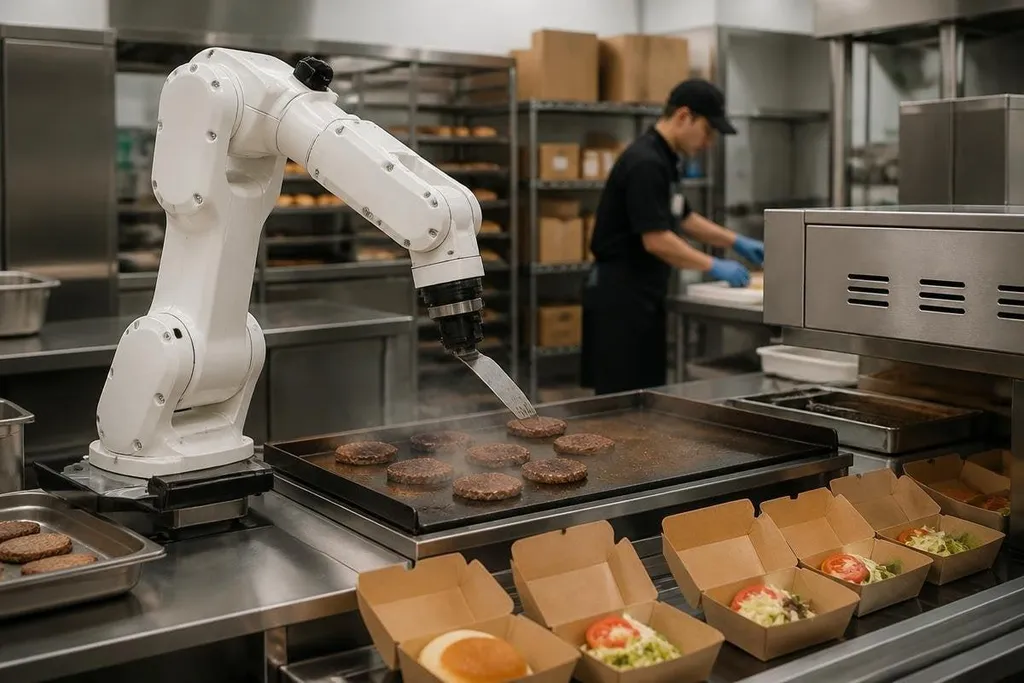
The machine might portion ingredients, place food on a hot surface, control cooking time, or move finished meals into containers. Each task creates a different business case, so the first question is the job it can repeat safely and at the needed speed.
Quick read
- Revenue can come from robot rentals, managed kitchen services, or equipment sales.
- The best first jobs have fixed ingredients, repeatable steps, and clear quality checks.
- Cleaning, food safety, maintenance, and menu changes can decide the sale.
Where the money could come from
A cooking robot company can sell hardware to restaurant groups, but that is only one route. It can also charge a monthly fee for the robot, software, maintenance, and remote support. That model lowers the first payment for a kitchen, though it gives the maker more work after installation.
A managed service is another option. The robot maker could install and run an automated cooking station inside a food hall, hospital kitchen, or delivery kitchen, then charge for each meal or shift. This gives the maker control over setup and training, while the kitchen gets a working service instead of a box of parts.
Ingredient companies and food distributors could also use cooking robots to sell prepared meal kits or fixed recipes. A recipe with measured portions makes the robot easier to program because the food arrives in a known form. That can reduce variation during cooking and make each batch easier to check.
The business case needs a test beyond one successful plate: can the robot repeat a fixed recipe across a paid shift? Reporting from Robot24.com can tie that claim to the kitchen task, batch size, and result, giving a meal-kit company a clearer basis for choosing its first job.
The first jobs should be narrow
Open-ended cooking is a hard place to start. A kitchen worker can change a recipe after seeing the food, while a robot needs defined inputs, fixed tools, and a clear response when something goes wrong.
A better first job has a short list of ingredients and a repeatable path.
Portioning dough, placing food into a fryer, stirring a fixed mixture, or loading trays can fit that pattern when the equipment and safety rules support it. The business value comes from repeat work that a kitchen already performs many times each day.
The robot also needs an end effector, which is the tool attached to its arm. A gripper may hold a tray, while a spoon, spatula, pump, or dosing head may suit another task. Changing that tool can change the cost and time needed for each menu item.
Costs that can erase the case
Hardware is only one line in the budget. A kitchen may need new electrical circuits, guarding, ventilation, floor space, network access, and staff training before the robot can run during service.
Cleaning can be harder than cooking. Food residue on a sensor, gripper, or heated surface can stop the station or create a food safety problem. A robot that needs long manual cleaning each night may save little labor across a full week.
Menu changes create another test. If a restaurant changes portion size, sauce, container, or cooking time, someone must update the robot and check the result. That work needs a clear owner, whether it sits with the kitchen, the robot maker, or a service company.
The machine’s limits need to be priced too. A robot may handle one fixed station well while needing a person to load ingredients, clear jams, inspect food, and stop the system during a fault. That still may be useful, but the business case should count those hours.
A practical buying check
Before funding a cooking robot, check these points:
- Name one task: measure its repeat rate, cycle time, and error cost.
- Map the inputs: list every ingredient, container, tool, and handoff the robot needs.
- Price the full setup: include installation, guarding, cleaning, training, software, and repairs.
- Set a human role: decide who loads food, checks quality, handles faults, and cleans the station.
- Test menu changes: record the time and cost needed to update one recipe.
- Set a stop rule: define the output, uptime, and safety results required before wider use.
I'd back a cooking robot only when the buyer can name the task, the output, and the person responsible for the gaps around it.
The near-term opportunity is a focused cooking station with a clear owner. Until makers show how that station handles cleaning, faults, and recipe changes during normal service, the business case stays unfinished.